
FUE Philadelphia
FUE (Follicular Unit Extraction) Hair Transplant Explained
FUE Philadelphia, also well-known as Follicular Unit Extraction, is a less invasive method used in Philadelphia for collecting hair follicles from the donor regions, typically located at the back and sides of the head. Utilizing advanced technology and tools, specifically designed punches smaller than 1mm, our team efficiently extracts numerous follicles and transplants them to desired thinning or balding regions on the scalp. This precision ensures a very low risk of damaging the follicles, minimal discomfort for the patient, and barely noticeable scarring.
How FUE Works at Our Philadelphia Clinic
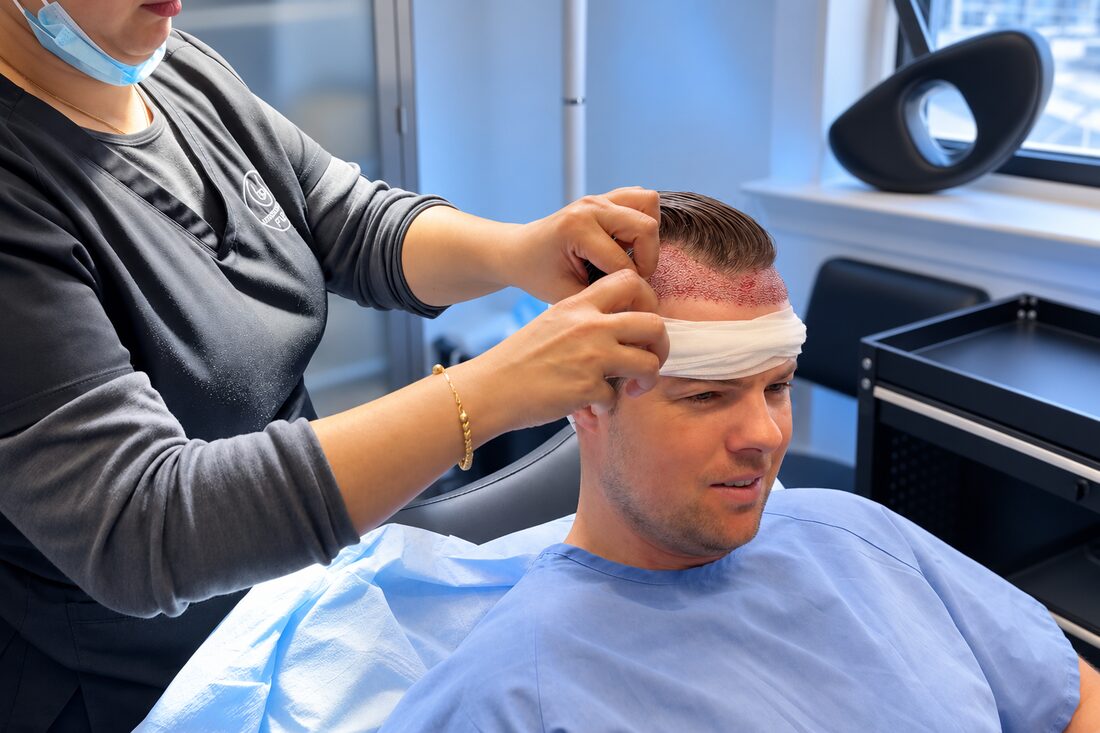
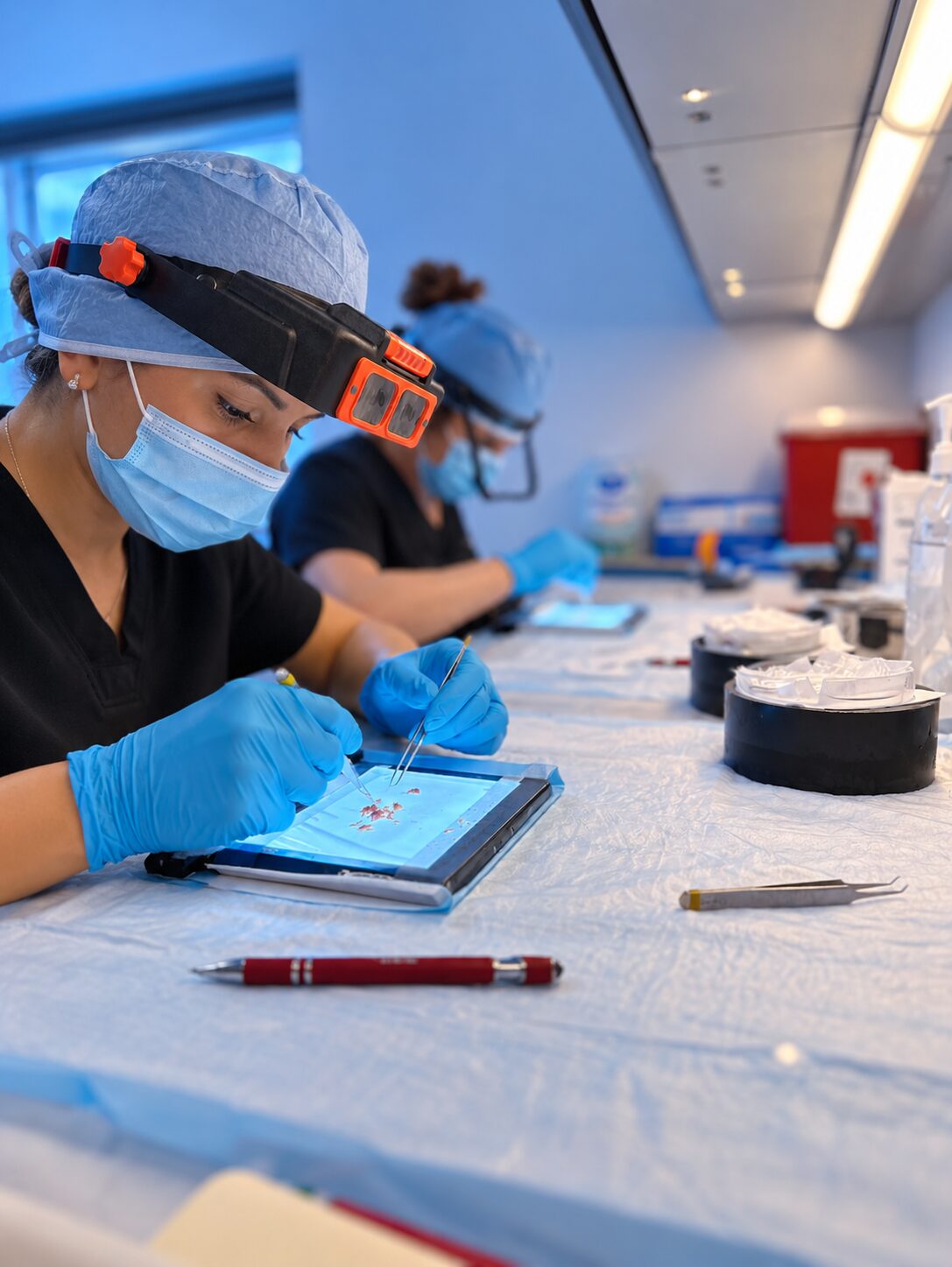
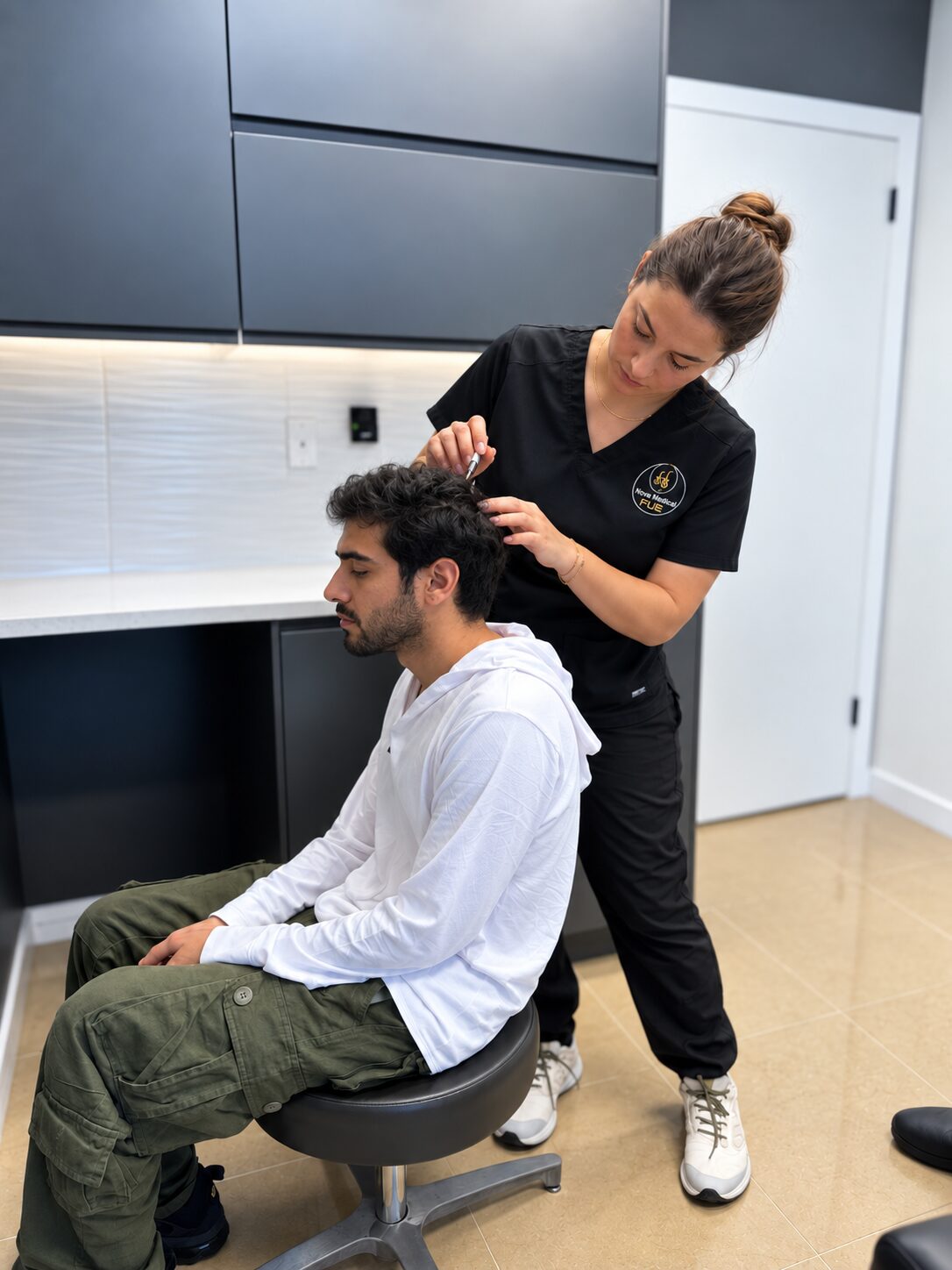
At Nova Medical Hair Transplant, we prioritize precision and personalized care over automated methods. Each follicle is extracted by hand by our experienced in-house team, with every plan overseen by Dr. Val Prokurat, MD, for a high degree of accuracy. After harvesting the follicular units, we employ microsurgical tools and magnification to accurately place the grafts into the hairline and areas showing signs of thinning or baldness.
FUE Philadelphia is favored by about 80% of our male clients due to its minimally invasive nature, avoiding the linear scar associated with other methods such as FUT. This technique allows for shorter haircuts or even shaving without the worry of visible scarring. Most of our patients report minimal discomfort and quick recovery times, leading to natural-looking, undetectable results. At our clinic, we view hair transplantation as a transformative procedure that not only restores hair but also significantly enhances self-confidence.
How a graft is placed matters as much as how it is harvested. Every follicular unit is set at the angle, depth and spacing of the hair around it, which is why a well-planned FUE hairline is so hard to tell apart from natural growth. Dr. Val Prokurat, MD, oversees each FUE plan at our Philadelphia clinic, whether you live in Center City, on the Main Line or across the river in South Jersey.
Before & After Gallery
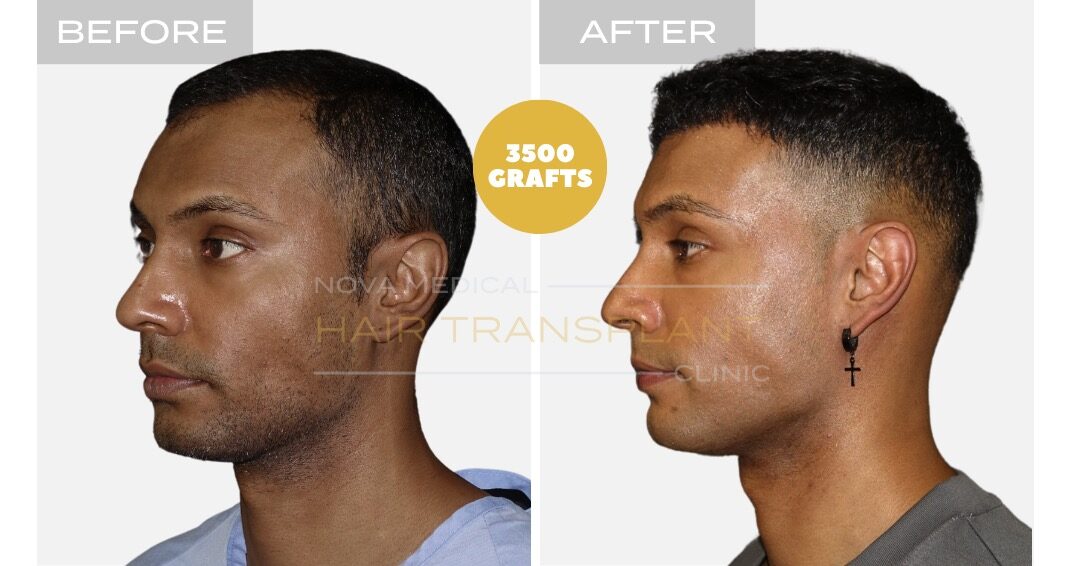
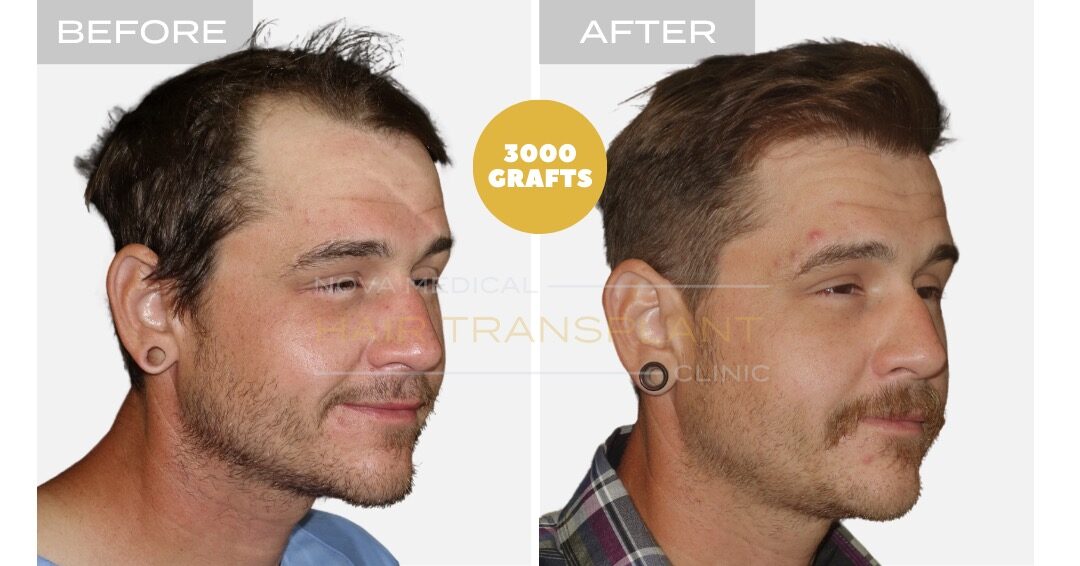
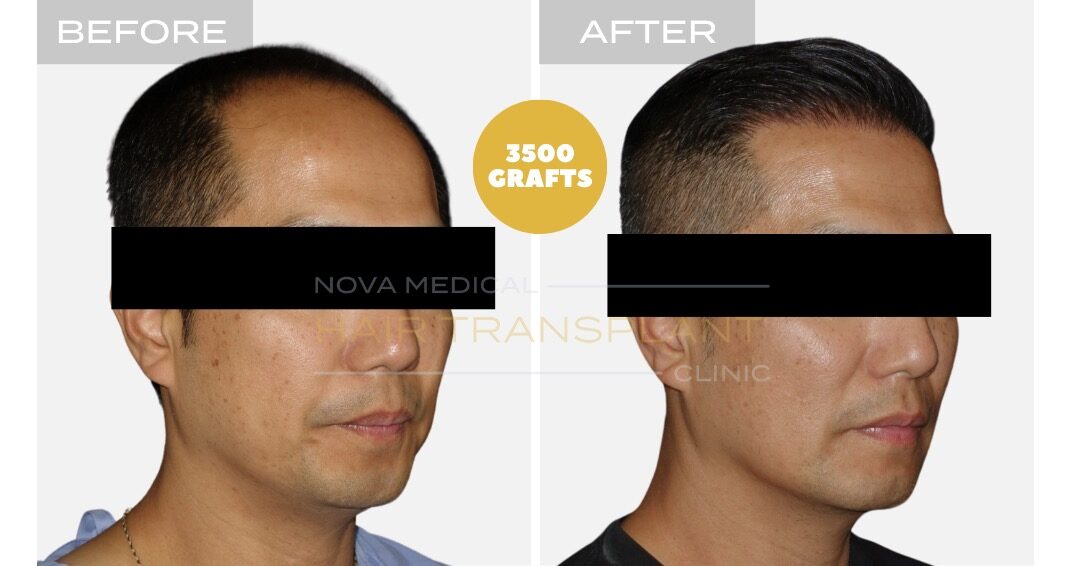
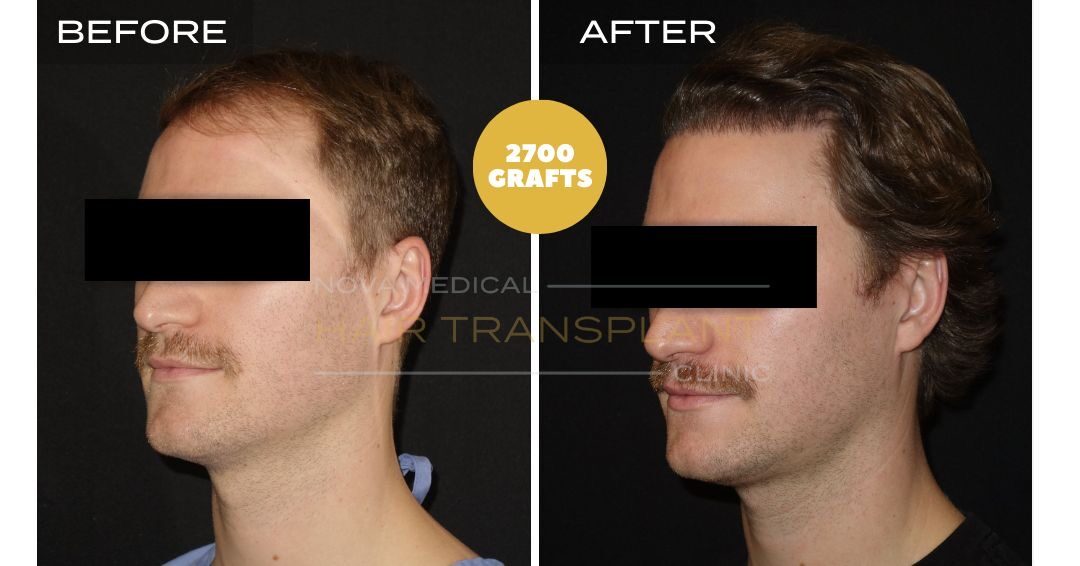
How FUE Hair Transplant Works
-
1
Consultation & Assessment
We start by examining your scalp up close: where the hair is thinning, how much healthy donor hair you have at the back and sides, and what result you are hoping for. By the end of the visit you have an estimated graft count and a treatment plan built around your scalp.
-
2
Hairline Design
Your new hairline is drawn on the scalp before anything else happens, and we refine it with you in the mirror until its height, shape and temple corners suit your face. The front edge is kept soft and irregular, the way natural hairlines grow.
-
3
Follicle Extraction
Once the donor area is numb, follicular units are removed individually with a punch less than 1mm wide. The tiny openings close up within days, and no strip of scalp is removed at any point.
-
4
Graft Placement
Each graft is set into its own recipient site, matching the direction, angle and depth of the hair next to it, so the new hair grows in the same way as your existing hair.
-
5
Healing & Regrowth
The transplanted hairs usually shed within the first few weeks, which is normal. Fresh growth tends to appear from around month four and keeps thickening until the final result settles at 12 to 18 months.
Cost Factors of an FUE Hair Transplant in Philadelphia
The price of an FUE Philadelphia hair transplant is determined by a variety of factors, such as the total number of follicles transplanted, any previous hair restoration procedures, and the specific characteristics of the donor and recipient sites. Location also plays a crucial role, as the cost can vary based on the clinic’s geographical area.
At Nova Medical Hair Transplant, we focus on the comprehensive approach of the procedure and the outcomes our patients desire. To aid in making the treatment more accessible, we also offer support for those seeking financing options.
Because a hairline-only case and a full crown restoration are very different procedures, we do not quote one flat price. At our Philadelphia clinic, FUE is priced per graft, from $3.99 to $7.99, and your exact figure is set once we have examined your scalp and agreed on a plan, with no session fees and 0% financing for the first 12 months.
Request a Free Consultation
No obligation • Same-week availability
How Long Is FUE Hair Transplant Surgery?
The time required for a Philadelphia FUE hair transplant surgery can range from 4 to 10 hours, largely depending on the quantity of grafts needed. For a session involving 2000-2500 follicular units, it might extend to 10 hours.
Despite the length of the procedure, patients often find it to be a comfortable and relaxing experience. Many choose to listen to music, catch up on podcasts, watch shows or movies on Netflix, or simply unwind.
We ensure to provide lunch, snacks, and ample breaks to keep you comfortable throughout the day.

Ideal Candidate for an FUE Hair Transplant
An FUE hair transplant is an optimal solution for individuals who find that their hair loss does not reflect their self-image or desired appearance. This method is especially suitable for those seeking a minimally invasive option with swift recovery, appealing to individuals who favor shorter haircuts or a completely shaven look without the concern of noticeable scars.
Candidates best suited for FUE Philadelphia include those with sufficient donor hair density, healthy scalp conditions, and realistic expectations about the outcomes. At our Philadelphia clinic, we provide both FUE and FUT techniques, catering to a wide range of needs. Our team of experienced surgeons is dedicated to guiding you toward the best choice for your unique hair restoration goals, with many of our male patients in Philadelphia opting for FUE for its discreet and effective results.
- Men with male-pattern hair loss, from a receding hairline to extensive thinning on top
- Hair loss that has been fairly stable for at least a year
- Enough healthy donor hair at the back and sides of the scalp
- Generally good health, and ideally no smoking, to support healing
- Clear, realistic expectations agreed with our team at the consultation
- Women with a high hairline, traction loss or thinning in defined areas
Advantages of FUE Philadelphia Hair Transplantation
Considering a hair transplant? Our Philadelphia team is ready to guide you through choosing the most suitable method for you. Here are the key benefits of opting for FUE hair transplantation with us:
Scar-Free
FUE allows you to boost your confidence and improve your look without any noticeable linear scars, contributing to a more youthful appearance.
Minimal Recovery Time
FUE is known for its minimal invasiveness. There’s no need for stitches, and there’s no linear scar, meaning the tiny donor sites (less than 1mm) typically heal within 2-3 days, causing minimal discomfort.
Boosted Appearance and Confidence
Our goal with FUE surgery is to achieve a look that’s not only natural and seamless but also boosts your self-esteem. The hair we transplant is yours to style, cut, and care for just like your natural hair.
Gentle on the Scalp
FUE is carried out under local anesthesia with a sub-millimeter punch, so there are no stitches or staples, and the skin between extraction sites is left largely undisturbed.
Permanent Hair Loss Solution
We extract follicles from the “permanent donor area” on your scalp’s back and sides. This ensures the transplanted hairs will continue growing as they did originally, offering a lifelong solution. For the majority of our male patients, FUE results are long-lasting.
Suits Every Hair Type
Straight, wavy, curly and coily hair can all be transplanted with FUE, provided the extraction angle follows the way each follicle grows beneath the skin.
Can FUE Conceal Scalp Scars Effectively?
At Nova Medical Hair Transplant in Philadelphia, our surgical team, overseen by Dr. Val Prokurat, MD, has extensive training and experience in advanced scar revision, reconstruction, and camouflage techniques. FUE hair transplants offer a strategic solution for correcting scars on the scalp, eyebrows, mustache, and beard areas, including those resulting from previous FUT strip surgery.
Our FUE Philadelphia approach is specifically designed to tackle and minimize the visibility of scars left by FUT surgeries. Even though FUT surgeries aim to leave minimal scarring, visibility can still be an issue, particularly for individuals who have undergone several procedures. By meticulously transplanting hair into these scars with FUE methods, we can effectively conceal them, enhancing both the appearance and confidence of our patients.
Where FUE alone is not the best answer, we can also talk you through surgical scar revision or scalp micropigmentation, so you can choose the approach, or combination, that will make an old scar least noticeable.
Why Choose Our Philadelphia Clinic for Specialized FUE Hair Restoration?
Deciding on the right clinic for your hair transplant is a significant personal decision. Unlike other clinics that may offer a wide range of services, our Philadelphia Hair Transplant Clinic specializes solely in hair restoration. This focus allows us to deliver unparalleled expertise and state-of-the-art treatments exclusively in this field. Our commitment to patient satisfaction is achieved through offering natural follicular unit hair transplant surgery within a comfortable and accredited surgical environment, upholding the utmost safety and comfort standards.
We provide a comprehensive suite of hair restoration services, including both FUT and FUE hair transplants, ensuring a solution tailored to every individual’s needs. Our clinic believes in hair transplantation as a transformative procedure, aiming to restore not just your hair but also your confidence and freedom.
By choosing us, you’re opting for a clinic dedicated solely to the art and science of hair restoration. We craft personalized treatment plans for each patient, focusing on achieving the best possible outcomes. Experience the difference of specialized care by scheduling a consultation with our expert team and discover how we can help you achieve your hair restoration goals.
FUE is just one of the options at our Old City clinic. We also offer beard and eyebrow transplants and hair restoration for women, and every plan follows the Nova Medical Protocol, so the technique is chosen to fit your goals rather than the other way round.
Preparing for Your Hair Transplant in Philadelphia
As you get ready for your FUE hair transplant surgery, there are several key steps to follow to ensure the best possible outcome:
-
1
Medications & Supplements
Before your FUE procedure in Philadelphia, our team will equip you with comprehensive pre-surgery guidelines. We’ll gather your complete medical history and review your current medications, most of which you can continue up to the day of surgery. For those on blood-thinning medications like Aspirin, Coumadin, or Plavix, our doctors will advise on any necessary adjustments or pauses in your regimen to ensure safety. Starting one week prior to your surgery, stop taking any anti-inflammatory medications, as well as supplements like vitamin E and B. These can interfere with the healing process and the overall success of your transplant.
-
2
Lifestyle Adjustments
It’s crucial to stop smoking and drinking alcohol at least one week before your procedure. Both can significantly impact your recovery and the effectiveness of the transplant. To promote optimal healing and graft success, we advise against using anti-inflammatory medications, certain vitamins, supplements, and alcohol for at least a week before your surgery. Smoking should also be reduced or avoided as it can hinder the healing process.
-
3
Scalp Preparation
On the day of your surgery, thoroughly wash your hair with shampoo and conditioner. This ensures your scalp is clean and ready for the transplant. On the day of your transplant, our surgeon and team will go over all your pre and post-operative care instructions again, including how to care for your scalp and wash your newly transplanted hair. We’ll cover all the essential “do’s and don’ts” and inform you when you can return to your usual activities.
FUE Hair Transplant Recovery at Our Philadelphia Clinic
- Day 1
After your FUE hair transplant, you'll leave our Philadelphia clinic with a light gauze over the donor site. The transplanted area should be kept clean and moisturized with a spray. Expect some initial swelling and discomfort. We'll also provide comprehensive care instructions.
- Day 2
You’ll be able to gently remove the gauze from the donor site. You might feel some discomfort, swelling, and redness, which are all manageable with prescribed medication. You're cleared to return to desk jobs and carry on with non-strenuous daily routines.
- Days 3-5
Swelling may peak during this period, possibly extending to your eyelids and cheeks, causing puffiness. This is temporary and resolves quickly. You can start washing your hair gently as per our guidelines.
- Days 5-6
You'll notice a significant reduction in swelling and discomfort, making it much easier to resume work or your everyday activities comfortably.
- Days 7-10
At this stage, you can start washing your hair in the usual way, gently rubbing the grafts to encourage any remaining scabs to come loose. You can also start incorporating light exercise back into your routine.
- Days 14-21
Any remaining scabs should be gone at this stage. While the donor hairs will shed with the scabs, the follicles remain and enter a resting phase. At this stage you can increase your physical activity, including swimming.
- Months 3-6
The new hairs will gradually start to appear at the 3 to 6 month mark. Patience is key during this new growth phase.
- Months 12-18
At this stage expect to see the full benefits of your hair transplant, revealing a more complete and natural-looking hair density and appearance.
Note: Avoid any heavy lifting or vigorous exercise for the first 4 weeks post-surgery to ensure optimal healing. After one month, you can gradually return to your regular exercise regimen.
What to Expect Right After Your FUE Procedure
Following an FUE procedure in Philadelphia, you’ll experience a faster and more comfortable recovery compared to traditional hair transplant techniques. There’s no need for special post-operative care, allowing you to resume your daily routine as early as the next day.
The tiny incisions made in the donor area to place the hair follicles don’t need stitches, meaning you can head home without needing a follow-up visit in person. These incisions will form scabs and heal on their own. After they’ve healed completely, these marks are almost invisible, blending flawlessly with the rest of your scalp.
FUE Hair Transplant Recovery Overview
Recovering from an FUE Philadelphia hair transplant, a minimally invasive procedure, typically spans about a week. Initially, the donor site will have a gauze bandage, which is removed the day after surgery. The small extraction sites start healing within 2-3 days and become less noticeable, resembling a close haircut, within a week.
The area receiving the grafts may develop crusts and scabs, lasting around a week. Swelling in the transplanted region is common for several days and may extend to the eyelids and cheeks, temporarily causing puffiness. This swelling is a standard post-operative reaction and should subside within 2-3 days.
While many patients choose to take a few days off work for recovery, you can engage in light activities like phone calls or computer work right after the procedure. Swelling and redness typically diminish within a week, making the transplant hardly noticeable. We advise waiting 5-7 days before returning to light exercise and suggest a 2-3 week pause from heavy physical activity and swimming.