
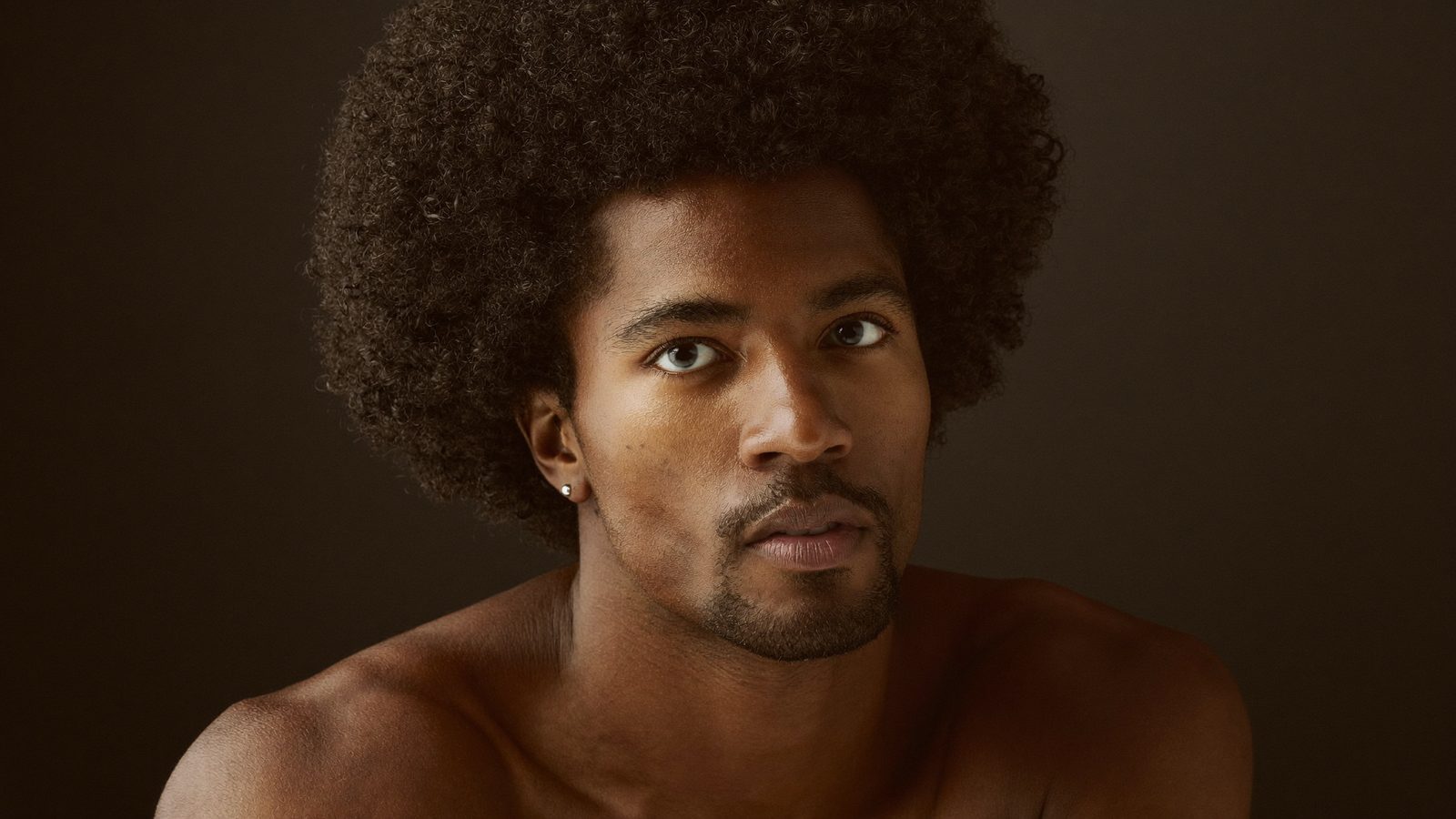
Afro and curly hair transplants can produce excellent, natural-looking results, but they are not simply a standard procedure performed on a different hair type. The curl you see above the skin continues below it: in tightly coiled and Afro-textured hair, the follicle itself is curved under the scalp. That one anatomical fact changes how grafts are extracted, how recipient sites are made, how many grafts you may need, and which technique is safest for you. Choosing a team that understands those differences is one of the most important decisions you will make.
In this guide our Philadelphia team explains what makes textured hair different, the specific risks to discuss, how FUE and FUT compare for curly and Afro hair, and how we plan these cases at our clinic in Old City.
What makes Afro and curly hair different under the skin
Straight hair usually grows from a follicle that is fairly straight beneath the scalp. Wavy and loosely curled hair grows from a follicle with a gentle bend. In tightly coiled and Afro-textured hair, the follicle often has a pronounced curve or C-shape below the surface, and the hair shaft is typically flatter and more elliptical in cross-section.
Several practical consequences follow:
- Extraction is harder. With FUE, a small round punch is used to free each follicular unit. If the follicle curves away from the direction of the punch, the tool can cut through the follicle, which is called transection. Transected grafts may not grow.
- Grafts are larger and more delicate. Curved follicles take up more room, so grafts are bulkier and must be handled gently to avoid damage.
- Visual coverage per graft is greater. Because each coiled hair occupies more space and lifts off the scalp, textured hair can create the look of good coverage with fewer grafts than straight hair would need.
- Donor density is often lower. Many patients with Afro-textured hair have somewhat fewer follicular units per square centimeter, which affects how many grafts can safely be taken.
- Skin healing differs. Patients with darker skin can be more prone to hyperpigmentation and, in some cases, keloid or hypertrophic scarring.
Key point: In textured hair, the challenge is mostly at the extraction and site-making stages. The curl below the skin means techniques that work routinely for straight hair need to be adapted, and test extractions are often part of the plan.
Common reasons patients with textured hair seek a transplant
Patients with curly and Afro-textured hair come to us for the same reasons as anyone else, but some patterns are more common:
Traction alopecia
Years of tight braids, cornrows, locs, weaves, extensions or tightly pulled styles can gradually pull follicles out along the hairline and temples. Once the follicles are permanently damaged, hair will not regrow on its own. Traction loss can respond well to transplantation, provided the styling that caused it is changed so the new hair is not lost the same way.
Male pattern hair loss
Androgenetic alopecia affects men of every background. Frontal recession, crown thinning or both are common reasons for men with curly or Afro hair to consider surgery. You can read more about planning by stage in our Norwood stage planning guide.
Hairline shape and temple refinement
Some patients simply want to restore or soften a hairline that has moved back or become uneven. Hairline design for textured hair has its own considerations, which we cover below.
Scarring alopecias that need diagnosis first
Some conditions, such as central centrifugal cicatricial alopecia (CCCA), occur more often in women of African descent and cause scarring at the crown. These need diagnosis and medical stabilization before a transplant is even considered, because transplanting into active inflammation often fails. We may recommend that you see a dermatologist first if we suspect a scarring process.
FUE vs. FUT for Afro and curly hair
Both techniques can work well in textured hair. The right choice depends on your curl pattern, donor density, how you wear your hair, your scarring tendency and the number of grafts you need.
| Consideration | Manual FUE | FUT (strip) |
| How grafts are harvested | Individual units removed with a small motorized handheld punch | A thin strip of scalp is removed and divided into grafts under magnification |
| Transection risk in curved follicles | Higher if not adapted; reduced with careful technique, punch choice and test extractions | Generally lower, because follicles are dissected under direct vision |
| Donor scar | Small scattered dot scars; suits very short or shaved styles if healing is good | A single linear scar, usually hidden by hair of moderate length |
| Keloid or raised scar concern | Many small wounds; tendency should be assessed beforehand | One longer wound; tendency should be assessed beforehand |
| Best suited to | Patients with favorable test extractions who wear their hair short | Patients with very tightly coiled hair, higher graft needs or lower FUE yield |
At our clinic we offer both manual FUE and FUT, which means we can recommend the method that fits your hair rather than the method we happen to have. With FUE in textured hair, our technicians adjust punch size, depth and angle to follow the curve of the follicle, and they often extract a small number of test grafts first to check how cleanly they come out before committing to a full plan. You can read about why manual technique matters in curved follicles, and how it compares to automated approaches, in our comparison of FUE, FUT and robotic FUE.
Risks to discuss before surgery
Every hair transplant carries some risk. For curly and Afro hair, a few deserve extra attention during your consultation.
- Keloid and hypertrophic scarring. If you or close relatives form raised scars after cuts, piercings or surgery, tell us. In some cases a small test procedure in the donor area is advised before a full session, and some patients may not be suitable candidates.
- Hyperpigmentation or hypopigmentation. Darker skin can develop light or dark spots around healing sites. These often fade over months but can persist in some patients.
- Folliculitis and ingrown hairs. Curly hairs growing back can curl into the skin, causing bumps. Good aftercare and prompt treatment help.
- Lower graft yield. If transection is high during test extractions, FUT may be a better choice or the plan may need to be smaller.
- Recurrence of traction loss. Transplanted hair can also be lost to traction if tight styles are resumed too soon or too often.
Plans for every case are reviewed by Dr. Val Prokurat, MD, and these risk factors are part of that review. For a wider look at what goes wrong in hair restoration and how to avoid it, see our article on why some transplants do not succeed.
Designing a hairline for textured hair
Hairline design for Afro and curly hair follows the same principles as any natural hairline, irregular edges, fine single-hair grafts at the front and density building behind, but some features are especially important:
- Shape. Many patients with Afro-textured hair have a naturally straighter or more rounded frontal hairline, often with defined angles at the temples. We aim to restore the shape that suits your face and heritage rather than imposing a generic design.
- Angle and direction. Recipient sites are made to match the natural exit angle and curl direction of your existing hair so new growth blends in.
- Coverage per graft. Because coiled hair covers more scalp, the same visual density can often be achieved with fewer grafts, which can help conserve donor supply.
- Edge detail. Some patients care a great deal about how the edges of the hairline can be styled. We talk through how you wear your hair so the design supports it.
Our article on graft angle, placement and face shape explains these design principles in more depth.
Recovery and growth in curly hair
Recovery is broadly similar to any transplant. Small crusts form at the graft sites and fall away over about one to two weeks. Transplanted hair commonly sheds between 2 and 6 weeks. New growth tends to begin around month 3 to 4 and continues to fill in over months 6 to 12, with the final result typically judged at about 12 to 18 months.
A few points are specific to textured hair:
- New curly hairs may look wiry or straighter at first, then take on their natural curl pattern as they mature.
- Pay attention to ingrown hairs and bumps in the donor and recipient areas, and let us know if they become painful or persistent.
- Avoid braids, extensions, weaves, tight wraps, wigs fixed with adhesive and chemical relaxers on treated areas until your care team clears you. Relaxers and harsh chemicals should be discussed specifically.
- Protect healing skin from sun exposure to reduce the risk of pigment changes.
Your written aftercare instructions will cover washing, sleeping position and when you can return to normal styling.
How many grafts and what it costs
Graft needs vary widely. Because each coiled hair provides more coverage, a hairline or temple restoration in Afro-textured hair may need fewer grafts than the same area in fine, straight hair, but donor density and graft yield can limit what is possible. We give you an individual range at the assessment after examining your donor area and, if needed, discussing test extractions.
At our Philadelphia clinic, FUE is priced per graft at $3.99 to $7.99, and most procedures total $4,000 to $15,000. There are no session fees, 0% interest financing is available for the first 12 months, and you receive a written quote after your free assessment. For women, our female hair transplant service includes complimentary PRP.
Questions to ask any clinic about textured hair
Whether you choose our team or another clinic, these questions help you judge experience with Afro and curly hair:
- How many patients with my hair type does your team treat, and can I see before and after photos of similar cases?
- Do you offer both FUE and FUT, and how do you decide between them for curly hair?
- Do you perform test extractions to check transection before a full session?
- How do you assess keloid risk, and what would you recommend if I have a history of raised scars?
- Who designs the hairline, and how do you account for the way I style my hair?
- When can I return to braids, locs or protective styles?
You can browse our before and after gallery to see a range of results.
Starting your plan at our Old City clinic
Our clinic is at 325 Chestnut Street in Old City, steps from Independence Hall, and patients visit us from across Philadelphia as well as South Jersey, the Main Line, Delaware County, Montgomery and Bucks counties and Wilmington. During a free in-person assessment we examine your curl pattern and donor area, ask about your styling history and scarring tendency, discuss the likely cause of your hair loss and recommend the technique that suits you. Procedures are carried out by our permanent in-house team of experienced technicians, with every plan reviewed by Dr. Val Prokurat, MD.
If you would like to talk before visiting, online and phone consultations are available. Either way, you will leave with a clear explanation of what is realistic for your hair, the risks that apply to you, and a written quote.
Medically reviewed by Dr. Val Prokurat, MD. Dr. Prokurat is a surgeon with advanced training in minimally invasive techniques who reviews and oversees every treatment plan at Nova Medical Hair Transplant Philadelphia, 325 Chestnut St in Old City. This article is for general education and is not a substitute for an in-person medical assessment. Individual results vary. Read more about Dr. Prokurat.
Plan a transplant for your hair type
We examine your curl pattern, donor area and scarring history, recommend FUE or FUT and give you a written quote at a free assessment in Old City.
Further reading: for independent background, see American Academy of Dermatology: hair transplants, American Academy of Dermatology: hair loss and International Society of Hair Restoration Surgery (ISHRS).