
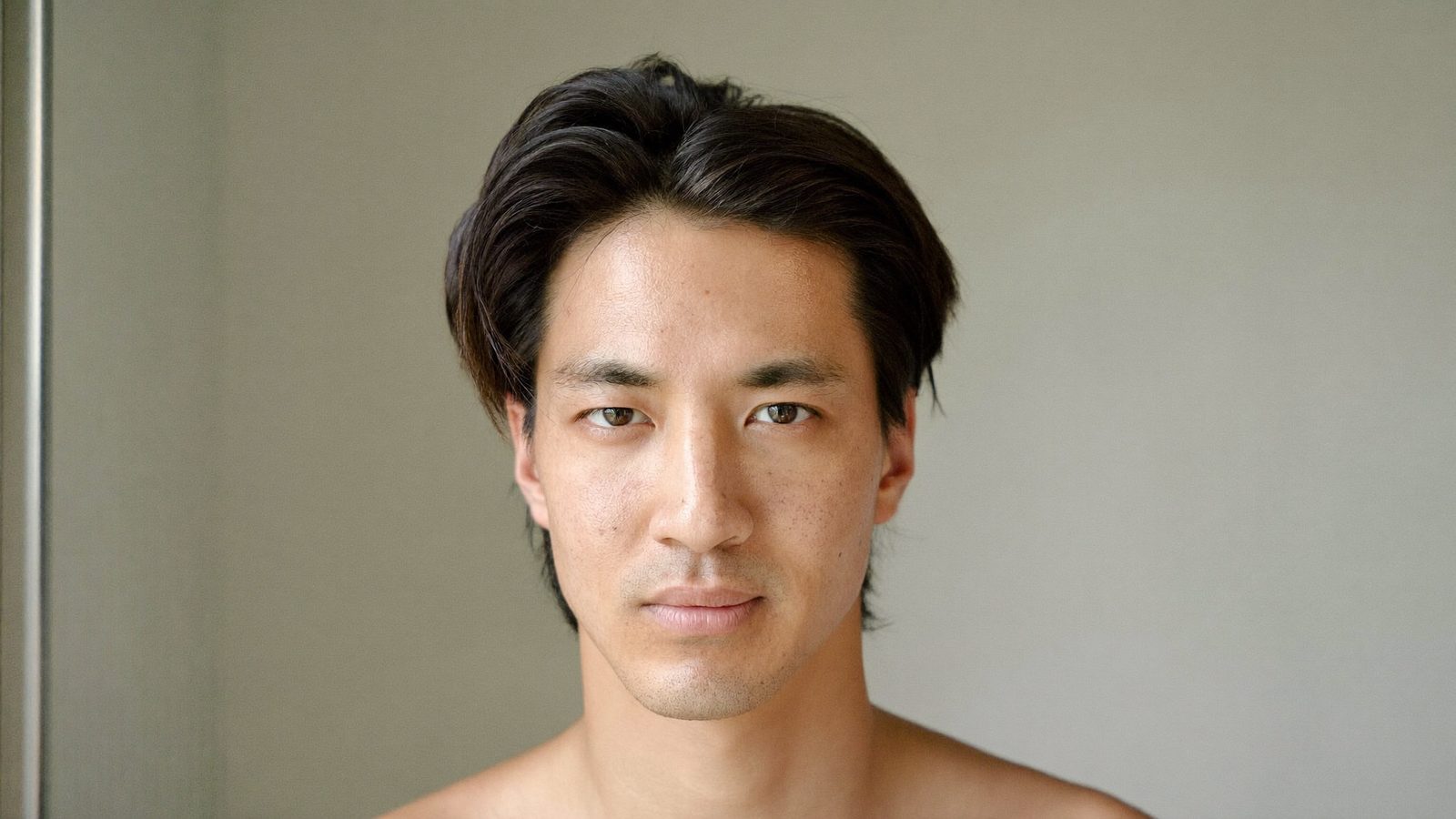
Yes, a hair transplant can fix a receding hairline in most men and many women, and it can also reshape, soften or rebuild a widow's peak. A receding hairline is the most common reason people book a consultation with our Philadelphia team, and it is also one of the most rewarding areas to treat, because a relatively modest number of well-placed grafts at the front can change how the whole face is framed. Whether surgery is the right move for you, though, depends on how far the recession has gone, whether it is still progressing, how much donor hair you have, and what shape of hairline will still suit you in twenty years.
This article explains how recession develops, when a transplant makes sense and when it does not, how a widow's peak fits into hairline design, and what the process looks like at our clinic in Old City.
Why hairlines recede in the first place
In men, the most common cause is androgenetic alopecia, often called male pattern hair loss. Follicles at the temples and front of the scalp are genetically sensitive to dihydrotestosterone (DHT), a hormone derived from testosterone. Over time, sensitive follicles miniaturize: each hair cycle produces a shorter, finer hair until some follicles stop producing visible hair at all. The temples usually go first, creating the familiar "M" shape, and the frontal line may then move back in the center as well.
Not every hairline change is pattern loss. Several other situations look similar:
- Maturation. Most men's hairlines move up by a modest amount in their late teens and twenties as the juvenile hairline becomes an adult one. This is normal and not necessarily a sign of ongoing loss.
- Traction alopecia. Tight braids, ponytails, weaves or headwear worn for years can pull follicles out at the front and temples.
- Frontal fibrosing alopecia and other scarring conditions. These inflammatory conditions cause the hairline to recede, often with eyebrow loss, and need medical diagnosis. Transplanting into active disease usually fails.
- Female pattern hair loss. Women more often thin diffusely along the part, but some develop temple recession or a higher frontal line.
Getting the cause right matters, because a transplant is a good answer for stable pattern loss and traction loss but often the wrong answer for active scarring alopecia. During your assessment we look for miniaturization, scarring and inflammation before discussing surgery at all.
Can a hair transplant fix a receding hairline?
For the right candidate, yes. Hair moved from the back and sides of the scalp, the so-called safe donor zone, keeps its resistance to DHT after it is moved. That is why transplanted hair at the front tends to stay long after the surrounding native hair continues to thin. A transplant can:
- Lower and reshape the front line where it has moved back.
- Rebuild or soften the temple recessions so the "M" is less pronounced.
- Add density behind the new edge so the front looks full rather than see-through.
- Restore temple points, the small triangles of hair in front of the ears that frame the face.
What a transplant cannot do is stop your native hair from continuing to thin. If your recession is still active, the plan has to account for where your hair is likely to be in ten or fifteen years, not just where it is today. We cover the broader questions of age and stage in our guide on whether you are a candidate.
Key point: The goal with a receding hairline is not to recreate the hairline you had at 17. It is to build an adult hairline that suits your face today and still looks right if more hair is lost behind it later.
How recession stage changes the plan
Doctors often describe male pattern loss using the Norwood scale. Here is how the earlier, hairline-focused stages usually translate into treatment planning. The graft ranges are broad estimates only; the actual number depends on your hair caliber, density, desired look and donor capacity.
| Stage | What it looks like | Typical approach |
| Norwood 2 | Mild temple recession, front mostly intact | Often monitoring and medication first; small temple refinement in selected adults |
| Norwood 3 | Clear "M" shape with deeper temple recession | Hairline and temple reconstruction, often around 1,200 to 2,000 grafts |
| Norwood 3 vertex | Temple recession plus thinning at the crown | Front prioritized; crown addressed according to donor supply and goals |
| Norwood 4 | Recession meets thinning on top, with a band of hair still separating front and crown | Larger frontal and mid-scalp plan, often 2,000 to 3,000 grafts or more |
For a detailed breakdown across all stages, including later ones, see our planning guide by Norwood stage and our article on estimating graft numbers, which goes deeper on donor math.
Very early recession and younger patients
We see many men in their early twenties who are understandably worried about the first signs of recession. In many of those cases the right first step is not surgery. Pattern loss at that age can still be moving quickly, and the final extent is hard to predict. Medical therapy such as finasteride or minoxidil, both FDA-approved for pattern hair loss, may slow or stabilize the loss; talk to your physician about whether either suits you and about potential side effects. Some patients also explore PRP treatment as a supportive option. Surgery is generally more predictable once the pattern is clearer.
What about a widow's peak?
A widow's peak is a V-shaped point of hair in the center of the hairline. Some people are born with a prominent one; in others, a peak becomes more noticeable as the temples recede around it, leaving a central "island" of hair at the front. Patients ask us about widow's peaks in three quite different ways:
Keeping or rebuilding a natural peak
If you had a peak before your hair loss and like it, we can incorporate a soft central point into the new design. The key is subtlety. A strong, sharply defined V can look artificial, so the peak is usually built from single-hair grafts with an irregular tip and gentle slopes on either side.
Softening an isolated peak
When the temples have receded deeply, the remaining central tuft can look exaggerated. In these cases we often fill the areas on either side of the peak, bringing the temples forward slightly so the peak blends into a more rounded or gently pointed hairline rather than standing alone.
Removing the appearance of a peak
Some patients, including women, would prefer a rounder front without a central point. Grafts can be placed on either side to flatten the peak visually. Actual removal of the hairs at the point is a separate question, usually handled with laser hair removal rather than surgery, and is something to discuss with your physician.
Designing the new hairline
Hairline design is where experience shows most. A few principles guide every plan our Philadelphia team prepares, and every plan is reviewed by Dr. Val Prokurat, MD before scheduling:
- Respect the donor budget. A typical lifetime FUE supply is roughly 5,000 to 7,000 grafts depending on donor density. Spending too much of it on a very low, wide hairline can leave too little for the crown or mid-scalp later.
- Use single-hair grafts at the edge. The front few millimeters are built almost entirely from one-hair units placed irregularly, with denser multi-hair grafts behind.
- Match angle and direction. Frontal hair exits at a low angle and points forward. Matching this is what lets the new hair lie flat and style naturally.
- Keep some temple recession for men. A small, natural recession at the temples is normal for adult men. Closing it entirely can look out of place.
- Fit the face. Face shape, brow height and forehead proportions all influence the final shape.
We go into these design principles in much more detail in our article on building a hairline that looks natural.
FUE or FUT for a receding hairline?
Both techniques can rebuild a receding front. The choice is mainly about the donor area, your hairstyle and how many grafts you need now and in the future.
- Manual FUE removes individual follicular units with small motorized handheld punches. It leaves tiny dot scars scattered across the donor area, which suits patients who like to wear their hair short at the back and sides. Most hairline cases at our clinic are done with FUE.
- FUT removes a thin strip of scalp from the back of the head, which is then divided into grafts under magnification. It leaves a linear scar that is usually concealed by hair of moderate length, and it can be efficient when larger graft numbers are needed. Learn more on our FUT page.
Whichever method is used, grafts are sorted by hair count and kept chilled until placement as part of the Nova Medical FUE Protocol, and recipient sites are made at the angle the plan calls for.
What to expect after hairline surgery
A frontal procedure usually takes most of a day. Afterward you will have small crusts at the graft sites for about a week to ten days, and some swelling of the forehead is common for the first few days. Most people return to desk work within a few days, though the front can be noticeable during the first week or so.
The transplanted hairs typically shed between 2 and 6 weeks. New growth tends to begin around month 3 to 4, with the hairline becoming fuller through months 6 to 12 and maturing at about 12 to 18 months. A hairline often looks a little uneven during months 3 to 6 as follicles restart at different times, which is normal. For a full walk-through, our month-by-month timeline covers each stage.
Protecting the rest of your hair
Because the hair behind a rebuilt hairline may continue to thin, long-term maintenance matters. We talk with every patient about a realistic plan for the native hair, which may include medication guided by your physician and periodic check-ins so we can see how things are changing.
Who should wait or consider alternatives
A transplant is not the best choice for everyone with a receding hairline. You may be better served by waiting or by non-surgical treatment if:
- You are very young and your loss is progressing quickly with no clear pattern yet.
- Your donor area is thin or shows miniaturization itself, which can happen with diffuse unpatterned loss.
- Your recession is caused by an active scarring or inflammatory condition that has not been stabilized.
- Your expectations center on a very low, straight, teenage hairline that your donor supply cannot support over a lifetime.
We would rather tell you honestly at the first visit that surgery is not the right step yet than perform a procedure that will look out of place in a few years.
Starting with an assessment in Old City
Our clinic is at 325 Chestnut Street in Old City, close to Independence Hall, and patients come to us from across the city as well as South Jersey, the Main Line, Delaware County, Montgomery and Bucks counties and Wilmington. The free in-person assessment includes a scalp and donor evaluation, a discussion of the cause and pace of your recession, and a proposed hairline drawn directly on your forehead so you can see the shape before committing. You then receive a written quote. FUE is priced per graft at $3.99 to $7.99, most procedures fall between $4,000 and $15,000, there are no session fees, and 0% interest financing is available for the first 12 months.
If you would like a first conversation before visiting, online and phone consultations are also available. Either way, you will leave knowing whether your receding hairline is a good fit for surgery, what a realistic result looks like, and what we would recommend if the answer is not yet.
Medically reviewed by Dr. Val Prokurat, MD. Dr. Prokurat is a surgeon with advanced training in minimally invasive techniques who reviews and oversees every treatment plan at Nova Medical Hair Transplant Philadelphia, 325 Chestnut St in Old City. This article is for general education and is not a substitute for an in-person medical assessment. Individual results vary. Read more about Dr. Prokurat.
Get your hairline assessed
We check the cause and pace of your recession, draw a proposed hairline on your forehead and give you a written quote at a free assessment in Old City.
Further reading: for independent background, see American Academy of Dermatology: hair transplants, American Academy of Dermatology: hair loss and International Society of Hair Restoration Surgery (ISHRS).