
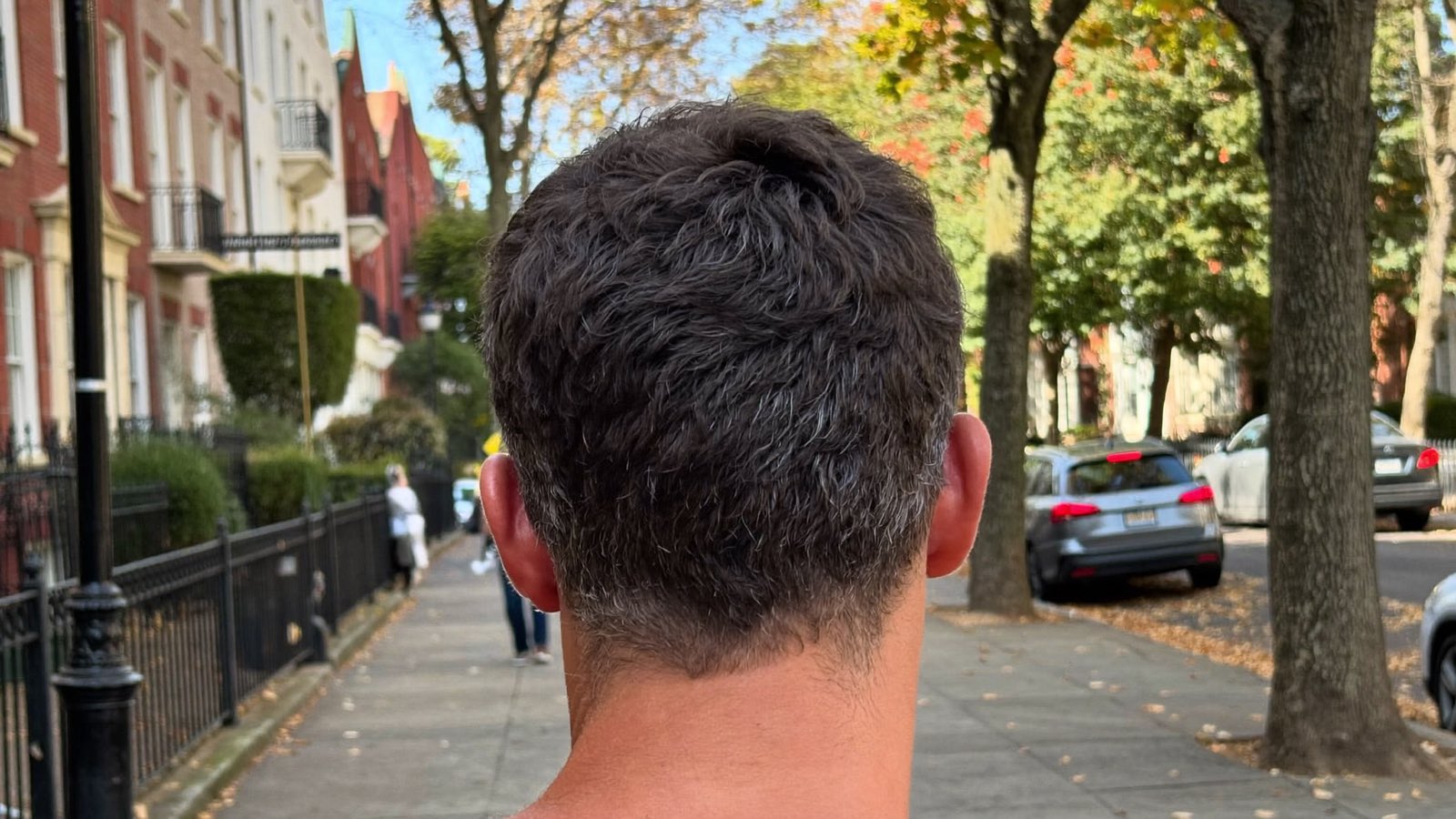
Your donor area is the band of hair at the back and sides of your head that a transplant draws from, and it is a fixed supply. Each follicle moved is one that will not grow back in the donor area, so every plan is really a decision about how to spend a limited budget. That is why no honest clinic can offer unlimited grafts. Protecting it is built into every plan for FUE in Philadelphia at our clinic.
This guide explains why the supply is fixed, what sets your personal limit, how a supply is usually spent across a lifetime and how to spot an overused donor area. Zone-by-zone counts live in a separate article, how many grafts do I need; here the focus is the supply side.
In brief: donor hair is a one-time budget. Its size depends on your density, the width of your safe zone, the thickness of your hairs and, for strip surgery, scalp flexibility. A good plan spends it where it shows most and keeps a reserve for hair you may lose later.
Why Your Supply Is Fixed
Your supply is fixed because hair follicles do not regenerate once removed. FUE takes each follicular unit out whole, and the small wound heals with a tiny scar where no hair will grow again. FUT removes a strip of skin, and the same is true for the follicles in it. The donor area does not refill; it only thins as grafts are taken.
There is also a limit to how far it can be thinned before it shows. Taking hair evenly across a wide area keeps the back looking natural; taking too much from one patch leaves it see-through. So the usable supply is smaller than the total number of follicles, because some must stay to keep the donor area looking full.
Four Things That Set Your Limit
Four factors decide how large your personal donor budget is. They vary a lot from person to person, which is why two people with the same pattern of loss can be offered very different plans.
- Density: how many follicular units grow in each part of the donor area. Higher density means more grafts can be taken before the area looks thin.
- Safe zone size: the width and height of the band that is unlikely to thin later. A narrow safe zone limits the supply, because grafts from outside it may be lost in future.
- Hair caliber and character: thick, curly or coarse hair covers more scalp per graft, so the same supply goes further.
- Scalp laxity: for FUT, how flexible the scalp is affects how wide a strip can safely be removed.
These are checked in person, often with magnification, because photos cannot show density or hair thickness reliably.
Spending a Donor Budget Across a Lifetime
A donor budget has to cover not only the hair you want to restore now, but also hair you may lose later. That is why age and stage of loss matter so much to planning. Using the Norwood scale, which our Norwood stage guide explains, the table below shows how priorities usually shift.
| Situation | Usual priority | Reserve |
| Younger, early or fast-changing loss | Conservative hairline; treatment to slow loss | Large, because future loss is hard to predict |
| Settled loss at the front | Hairline and front, where grafts show most | Moderate, for possible crown thinning later |
| Front and crown both affected | Front first, crown in a later stage | Planned across two sessions |
| Advanced loss with a limited supply | Frame the face; accept lighter coverage behind | Small; supply is stretched to its useful limit |
The common thread is that the front of the head gets priority, because it frames the face and is seen first. Areas seen mainly from above or behind can look natural at lower density.
Where a plan falls in this table can change over time. Loss that seemed settled can pick up again, and someone who started cautiously may later have room for a second session once the pattern is clear. Reviewing the budget at each stage keeps those choices realistic.
Why "Unlimited Grafts" Offers Do Not Add Up
An offer of unlimited grafts does not add up because no donor area is unlimited. A fixed-price, unlimited package can encourage a clinic to take more grafts than the donor area can safely give, or to take them from outside the safe zone where hair may later be lost. Either way, the patient bears the cost later, with a thin donor area or grafts that disappear.
A responsible quote does the opposite: it states a specific graft count based on your supply and explains how much is being held back. If a clinic cannot tell you how many grafts it plans to take and why, that is worth questioning. Our guide to how to choose a hair transplant clinic covers other warning signs.
Signs of an Overused Donor Area
An overused donor area usually shows when hair is cut short. Common signs include a see-through or patchy look at the back, visible clusters of dot scars in one region, a moth-eaten pattern instead of an even spread, and thinning low on the neck or high on the crown where grafts were taken from outside the safe zone. These problems are among the hardest to correct, because the lost follicles cannot be replaced. Our article on why hair transplants fail explains how over-harvesting fits among other causes.
How Your Supply Is Checked at a Consultation
Your donor supply is checked in person, because photos cannot show it reliably. The team looks closely at the back and sides of your head, often with magnification, to judge how densely follicular units grow, how many hairs each unit carries and how thick those hairs are. The edges of the safe zone are mapped by looking for any thinning above the ears and at the crown margin, since hair there may be lost later.
If you have had a transplant before, the earlier extraction pattern is checked as well, along with any strip scar, to see how much supply remains and where it can still be taken from evenly. That information sets an honest upper limit before any graft count is written down.
Ways to Stretch Your Supply
There are several ways to make a limited donor supply go further:
- Protect native hair: medical treatment that slows loss reduces how many grafts you will need later.
- Spend where it shows: prioritize the hairline and front over maximum density everywhere.
- Use hair character: styling and length can make moderate density look fuller.
- Secondary donors: beard hair can sometimes add to the supply in selected cases; our beard transplant guide explains how facial hair behaves when moved.
Planning Your Supply in Old City
In Old City, Dr. Val Prokurat, MD reviews each plan against your donor budget, and our in-house team spreads extraction evenly across the safe zone. Each graft costs $3.99 to $7.99, so most procedures total $4,000 to $15,000. Session fees do not apply, and 0% financing covers the first year.
Find Out What Your Donor Area Allows
Visit 325 Chestnut St for a free consultation. The team examines the back and sides of your scalp, explain what your supply can realistically cover now and later, and sets out a written plan and price. Phone (267) 996-9966.
Further reading: for independent background, see American Academy of Dermatology: hair loss, MedlinePlus: hair loss and International Society of Hair Restoration Surgery (ISHRS).