
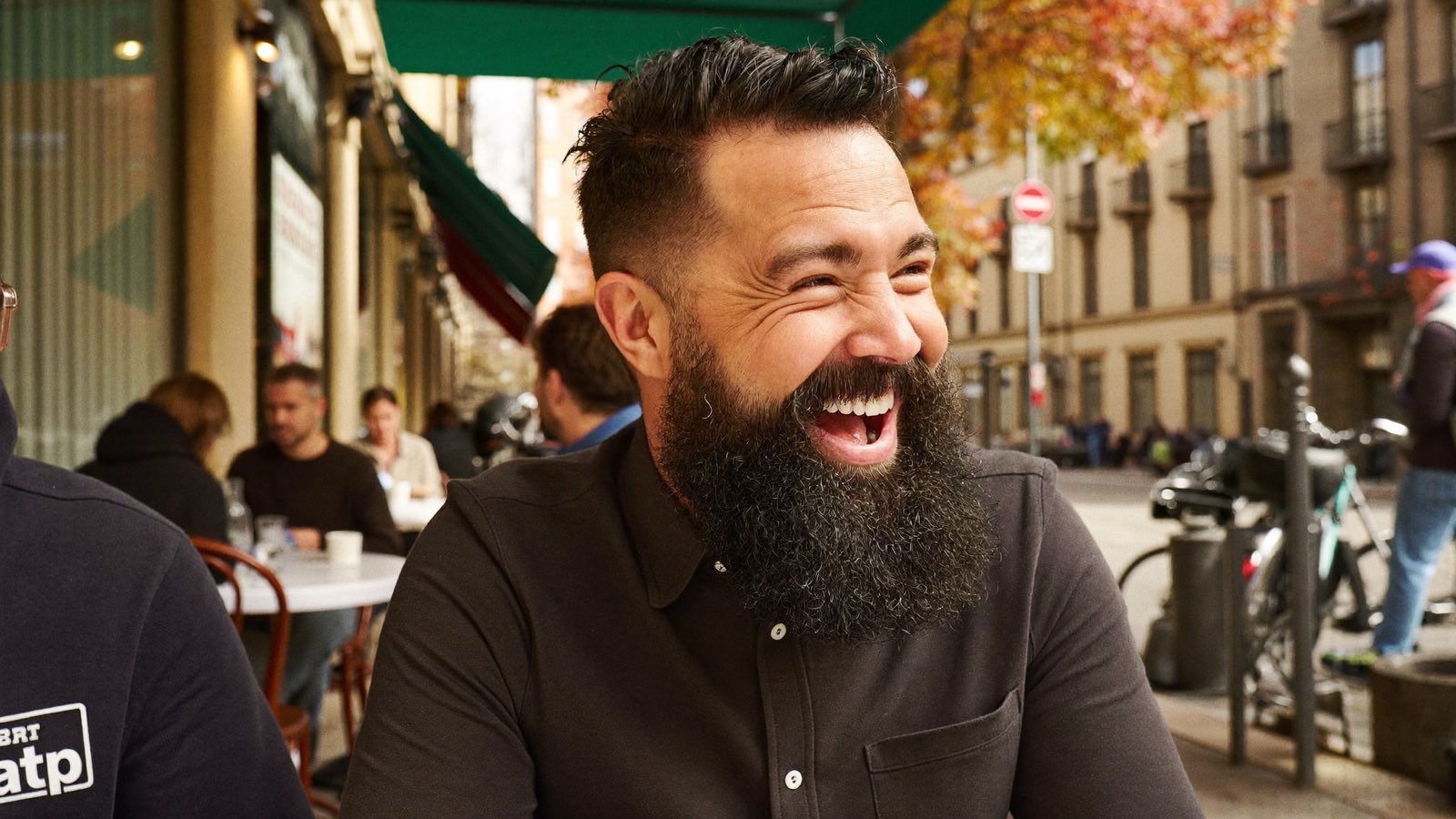
A beard transplant moves hair follicles, usually from the back of the scalp, into areas of the face where beard growth is thin, patchy or missing. Expect a design consultation, a single day for the procedure, a week or two of visible healing, a shedding phase in the first month, and new growth that fills in over roughly 9 to 12 months. The transplanted hair then grows like a natural beard: you can trim it, shape it and shave it. For the clinical details and pricing, our beard transplant in Philadelphia page covers the procedure itself; this guide walks through the experience from start to finish.
Many men put off a beard transplant because they are unsure what the process involves day to day: how visible it is, how long the redness lasts and when they will see a result. Below is each stage in order, with what is normal, what helps and what is worth asking about before you book.
Key takeaways
- A full beard often needs about 1,500 to 3,500 grafts; a mustache or goatee alone commonly needs around 500 to 800.
- The procedure takes one day, under local anesthesia, and you go home the same day.
- Redness and tiny scabs usually settle within about 7 to 10 days, and most people return to desk work within a few days.
- Transplanted beard hairs usually shed between about 2 and 4 weeks, then regrow from around 3 to 4 months.
- The final, fully filled result is usually visible at around 9 to 12 months, and the hair can then be trimmed and shaved like the rest of your beard.
Who is a good candidate for a beard transplant?
A good candidate for a beard transplant has patchy, thin or missing beard growth they want to fill, healthy donor hair on the back of the scalp, and realistic expectations about density and timing. Common reasons include genetically sparse beards, gaps on the cheeks or around the mustache, and scars from injury, acne or past surgery where hair no longer grows.
A few things are checked before anyone plans grafts. The team looks at why the beard is thin, because some patchiness comes from conditions that need a different approach, and at whether your donor hair matches your facial hair closely enough in thickness and color to blend. If scalp donor hair is limited, body hair such as chest hair can sometimes be used instead, although it grows differently and suits only some areas. It also helps if any existing facial hair has had time to show its full adult pattern, which for many men is not until their mid twenties.
Step 1: The consultation and beard design
The consultation is where your beard is designed. You and the team agree on the shape you want, from filling a few patches to building a full beard, and the outline is sketched directly on your face so you can see it in the mirror before anything is planned. Dr. Val Prokurat, MD designs and approves the plan with you.
Design choices make a big difference to how natural the result looks. The cheek line is usually kept soft and slightly irregular rather than ruler-straight. The neckline is set where it suits your jaw and how you like to wear your beard. Density is planned zone by zone, since the mustache, chin and jaw are usually fuller than the upper cheeks. Bringing a few photos of beard styles you like, ideally on faces similar to yours, makes this conversation easier.
How many grafts does a beard transplant need?
The number of grafts depends on how much facial hair you already have and how full you want each area to be. Rebuilding a full beard across the cheeks, chin, mustache and jaw often takes about 1,500 to 3,500 grafts, while a mustache or goatee on its own might need around 500 to 800. Filling a few patches can need fewer still.
| Area | Typical goal | Rough graft range |
| Mustache or goatee | Fill or define the area around the mouth and chin | About 500 to 800 |
| Patchy areas only | Close gaps on the cheeks or jaw | A few hundred and up, depending on size |
| Cheeks and jawline | Even, connected coverage along the face | Often 1,000 or more |
| Full beard | Cheeks, chin, mustache and jaw together | About 1,500 to 3,500 |
Beard grafts are mostly single hairs, placed one at a time at a shallow angle so they lie flat against the skin the way facial hair grows. That is different from scalp grafts, which are often two or three hairs. Our guide to how many grafts you need explains how counts are built for the scalp, which helps put beard numbers in context.
Step 2: Procedure day
A beard transplant is done in a single day at the clinic, and you go home the same day. The donor area at the back of the head is numbed with local anesthesia, grafts are removed one by one with FUE (follicular unit extraction), and then they are placed into the face following the approved design. Depending on the number of grafts, the day can run from a few hours to most of a working day.
Comfort is planned in. A numbing cream and buffered local anesthetic are used, and oral pain relief and a mild sedative are available. Most patients describe the numbing injections as the least comfortable part, followed by pressure rather than pain. Many listen to music or watch something while the team works. If you are anxious about this part, our article on whether a hair transplant hurts explains what is usually felt and when. Throughout the day, the in-house team carries out extraction and placement under Dr. Prokurat's direction.
Step 3: The first two weeks of healing
In the first days after a beard transplant, the face usually shows mild redness and tiny crusts around each graft, and there can be some swelling. These signs typically settle within about 7 to 10 days. The donor area at the back of the head heals in a similar timeframe and is easily hidden by your hair.
The first two weeks are about protecting the new grafts while they anchor. You will receive written instructions; a typical pattern looks like this:
- Days 1 to 3: keep the face clean and dry as instructed, avoid touching or rubbing the grafts, and sleep with your head slightly raised.
- Days 4 to 7: gentle washing usually begins as directed, and small crusts start to loosen on their own.
- Days 7 to 10: most redness and crusting fade, and many men feel comfortable being seen in public.
- Around day 10: the grafts have usually anchored securely, and normal washing and grooming can gradually return.
Most people with desk jobs return to work within a few days, sometimes with a few days of light stubble growing in the untreated areas to soften the look. Strenuous exercise, saunas and heavy sweating are usually paused for the first week or two. Our guide to what not to do after a hair transplant lists the common restrictions in detail.
Step 4: Shedding and the quiet months
Between about 2 and 4 weeks after a beard transplant, many of the transplanted hairs fall out. This shedding is normal and expected: the hair shafts drop, but the follicles beneath the skin stay in place and enter a resting phase before regrowing. It can feel discouraging, but it is a sign the healing is following the usual path.
The next couple of months are often called the quiet phase. Your face looks much as it did before the procedure, and nothing obvious seems to be happening. This is the stage where patience matters most, and it is a good time to keep follow-up appointments so the team can check that everything is on track.
Good to know: shedding after a beard transplant does not mean the grafts have failed. Most transplanted follicles regrow, and the new hairs usually begin to appear from around three to four months.
Step 5: Regrowth and the final result
New beard hairs usually start to appear from around 3 to 4 months after the procedure, often fine at first and thickening over the following months. By about 6 months many men see a clear difference, and the result typically keeps filling in until roughly 9 to 12 months, when density, texture and shape are close to final.
The transplanted hairs keep the character of the donor area they came from, which is why matching donor hair to facial hair matters at the consultation. In most cases the new hairs blend well with existing beard hair, and any slight difference in texture becomes much less noticeable once the beard is trimmed to a consistent length.
When can you shave or trim after a beard transplant?
Most men can begin gentle trimming and shaving around 10 days after a beard transplant, once the grafts have anchored and the crusts have cleared. After that, the transplanted hair can be trimmed, shaped and shaved like the rest of your beard, and it continues to grow back because the follicles are permanent.
In the early weeks, it is sensible to use clean electric trimmers rather than a blade and to avoid pulling or tugging at the treated skin. Your written instructions will give the exact timing that applies to you. Longer-term, ordinary beard care such as moisturizing the skin and keeping the beard clean supports the result, and our article on aftercare and maintenance covers the habits that help any transplant age well.
What a beard transplant costs in Philadelphia
Beard transplants are priced by the number of grafts placed, at $3.99 to $7.99 per graft, with most procedures between $4,000 and $15,000. There are no session fees, and 0% financing is available for the first 12 months. Because graft counts for beards vary so widely, from a few hundred to several thousand, your written quote after the consultation is the figure to rely on.
When comparing quotes, check that each one states the number of grafts and the areas covered, so you are comparing like with like. A lower price per graft means little if the plan does not match the beard you want.
Plan the Beard You Want
Book a free consultation at our Old City clinic, 325 Chestnut St. We sketch your beard design with you, check your donor hair and give you a written graft estimate and per-graft quote.
Further reading: for independent background, see American Academy of Dermatology: hair loss, MedlinePlus: hair loss and International Society of Hair Restoration Surgery (ISHRS).